Why Face-to-Face Training Still Wins for Personal Trainers
In-Person Learning: Why Face-to-Face Training Still Wins for Personal Trainers
The fitness industry has embraced online learning. It's sold as flexible, 'more accessible', and often cheape, therefore seems more affordable. But when it comes to building a career as a personal trainer, there's something irreplaceable about learning in person and the solid foundation face-to-face teaching provides.
Surely Hands-On Skills Demand Hands-On Teaching
Personal training is a physical profession. You'll spend your career correcting form in real time and making split-second adjustments based on what you see and the instant feedback you get from clients. These skills are difficult to develop through a screen or via email discussion with tutors.
In-person courses let you practise techniques on real people, such as how much pressure to apply on a PNF stretch, or understanding what proper bar position looks like from every angle. You make mistakes in a safe environment with immediate feedback, not alone in your house or in a coffee shop hoping you've got it right.
Immediate Feedback
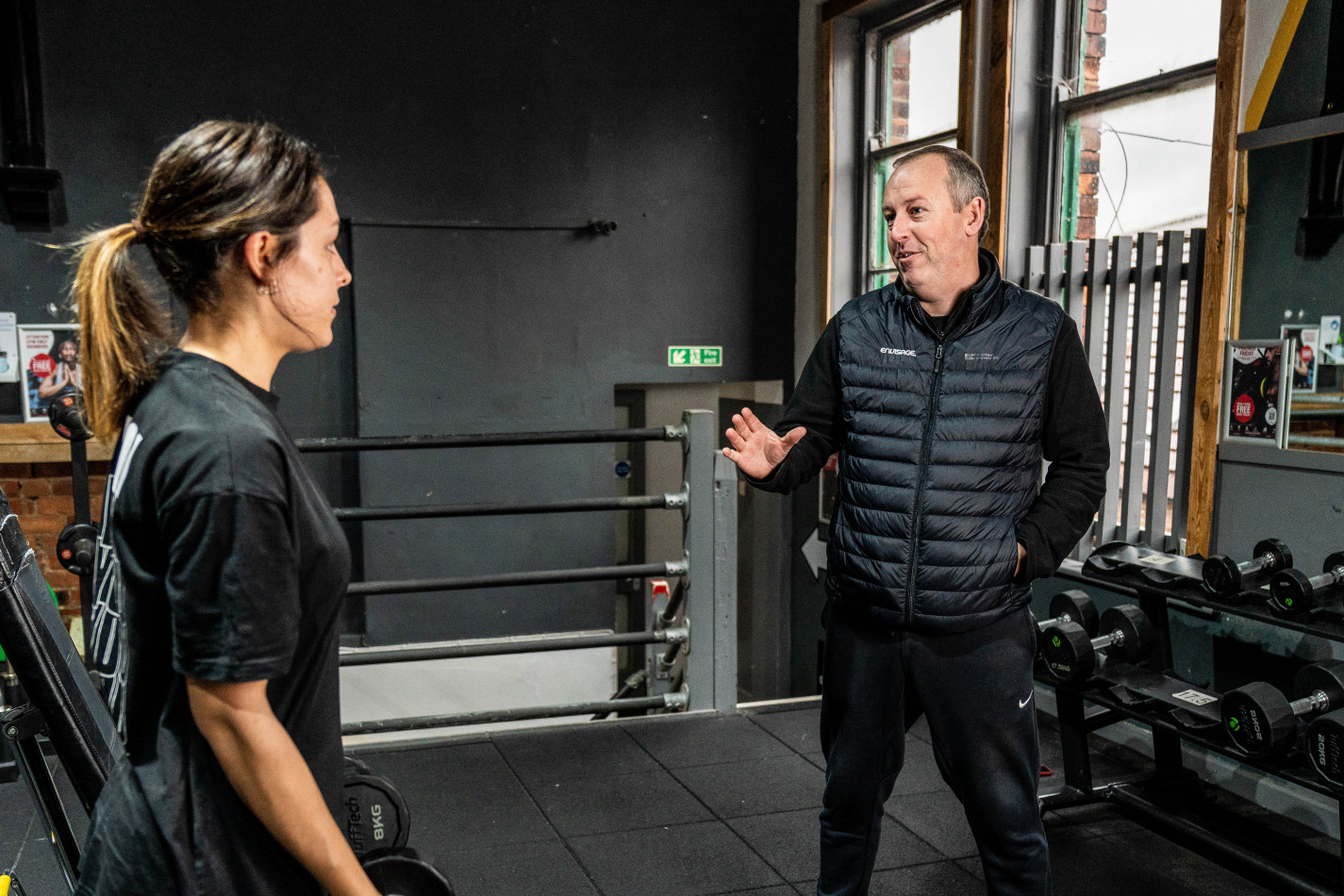
Online courses can offer quizzes and video submissions, but they can't replicate a tutor watching you coach a deadlift and saying, "Your cue was good, but you missed that her lower back started rounding at rep three, here's what to watch for."
That kind of real-time, context-specific correction accelerates learning in a way delayed feedback simply can't match. It also models the exact skill you'll need with clients: observing movement, identifying issues, and coaching adjustments live, at the time.
Building Confidence Before You're in Front of Clients
Many new trainers struggle with confidence, not because they lack knowledge, but because they've never actually done the job before their first paying client. In-person courses give you hours practising assessments, programming, and coaching with fellow students acting as clients, all under the expert supervision of your course tutor.
By the time you qualify, you've already navigated awkward silences, experimented with different coaching styles, and learned how to project self-assurance, even when you're nervous. That practical confidence is hard to build from behind a laptop.
Networking That Lasts Beyond the Course
Your classmates become your first professional network. In-person cohorts build relationships that lead to referrals, job opportunities, and peer support as you navigate your early career. Many graduates stay in touch for years, sharing advice and client leads, sometimes even starting businesses together.
Online forums and groups offer community, but there's a depth to relationships formed through weeks of in-person collaboration, celebrating each other's progress, struggling through practical exams together, that virtual connections rarely replicate.
Structured Immersion vs. Self-Paced Drift
Self-paced learning sounds appealing until life gets in the way. Online courses have notoriously high dropout rates because it's easy to deprioritise coursework when there's no class to show up to.
In-person programmes create accountability through structure. You commit to specific dates, show up, and progress with a group. For many learners, that external framework is the difference between finishing in three months and abandoning the course halfway through.
The Bottom Line
Online learning has its place, especially for continuing education, theory-heavy modules, or trainers adding specialisations. But for foundational qualifications, where you're building the hands-on skills and professional confidence that define your career, in-person training offers advantages that are hard to replicate remotely.
This blog is trying to show you our passion for in-person teaching, we pride ourselves on providing supportive courses which challenge our learners to be their best. We know there are some very good companies delivering online training, and we also know there are some that are not so good. We've seen this first-hand with numerous people coming to us with an online course certificate, who then choose to do the course in person again, at additional cost, so that they feel confident about their skills and knowledge.
If you're serious about becoming a personal trainer, investing in face-to-face education isn't old-fashioned, it's strategic.
For Information about our combined gym instructing and personal training course, click the link below: